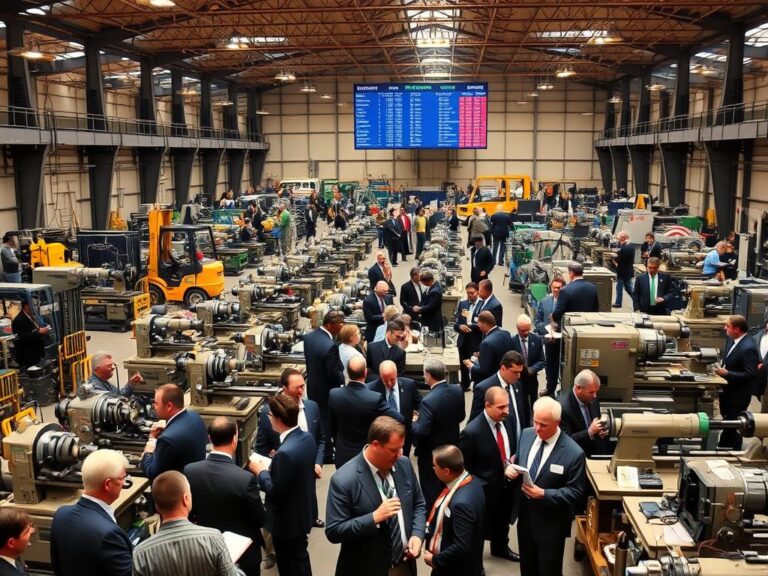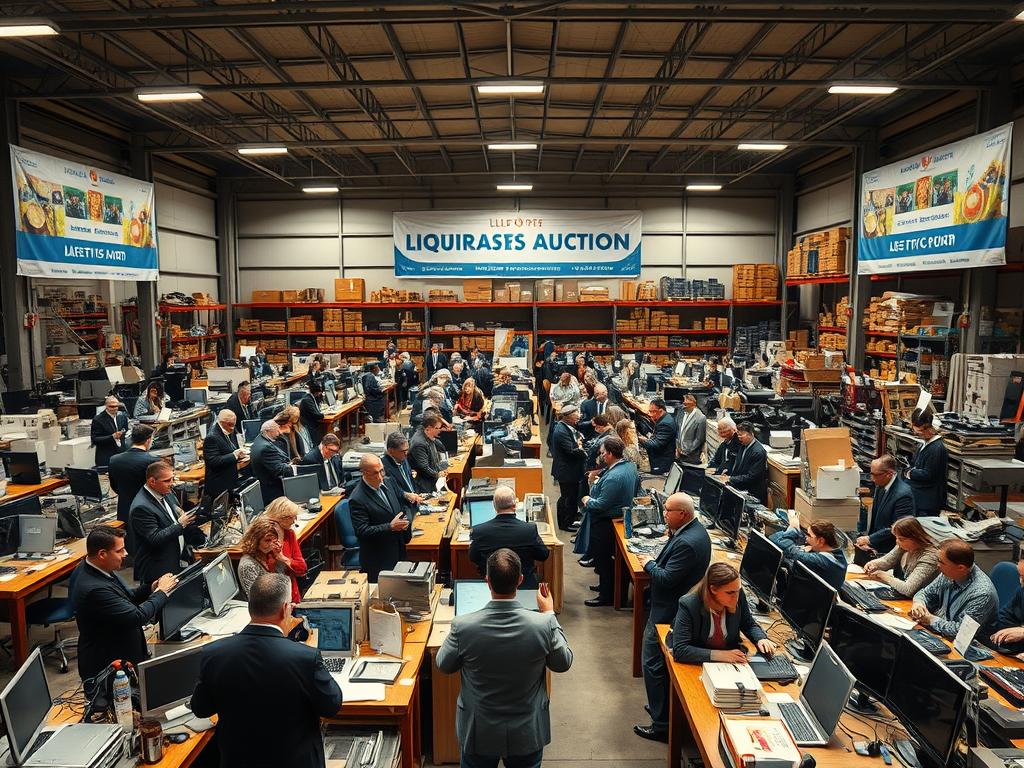

When a company goes bankrupt, its assets are sold off to pay creditors through a process known as a liquidation auction. This involves listing the company’s tangible and intangible assets, such as equipment, inventory, and intellectual property, for public bidding.
You can acquire valuable business assets at a fraction of their original cost by participating in these auctions. The auction process is typically conducted by a third-party company that specializes in managing and selling off the assets of bankrupt businesses.
Understanding how liquidation auctions work can help you navigate this complex process and make informed decisions when buying business assets from bankrupt companies.
Key Takeaways
- You can acquire business assets at discounted prices through liquidation auctions.
- The auction process involves listing a bankrupt company’s assets for public bidding.
- A third-party company typically manages the liquidation auction process.
- Understanding the auction process is crucial for making informed decisions.
- Liquidation auctions provide an opportunity to buy valuable assets from bankrupt companies.
What Are Liquidation Auctions?
Liquidation auctions are a result of the bankruptcy process, providing buyers with access to a wide range of business assets. When a company goes bankrupt, its assets are sold to pay off creditors. This process is known as asset liquidation.
The Bankruptcy Process and Asset Liquidation
The bankruptcy process involves several steps, including the assessment of the company’s assets and liabilities. Asset liquidation is a critical part of this process, as it allows the company to pay off its debts by selling its assets. You can participate in this process by bidding on assets at liquidation auctions.
The bankruptcy process typically involves:
- Assessment of assets and liabilities
- Identification of assets to be liquidated
- Auction or sale of assets
- Distribution of proceeds to creditors
Types of Liquidation Sales
Liquidation sales can be categorized into two main types: voluntary and involuntary. Voluntary liquidations occur when a company decides to sell its assets for various reasons, such as restructuring or closing down a specific business line. Involuntary liquidations, on the other hand, are forced upon a company due to bankruptcy or other financial difficulties.
Some key characteristics of these types include:
- Voluntary liquidations:
- Company chooses to sell assets
- May be part of restructuring
- Involuntary liquidations:
- Forced by financial circumstances
- Assets sold to pay off debts
Types of Business Assets Available at Liquidation Auctions
You can find a wide array of business assets at liquidation auctions, making them attractive to a broad spectrum of buyers. Whether you’re looking to expand your business or start a new venture, these auctions offer opportunities to acquire assets at discounted prices.
Equipment and Machinery
Liquidation auctions feature a variety of equipment and machinery from bankrupt businesses. This can include manufacturing machinery, construction equipment, and commercial kitchen appliances. Buyers can find both new and used equipment, often at significantly lower prices than market value.
Inventory and Merchandise
Inventory and merchandise are also commonly sold at liquidation auctions. This can range from retail stock to raw materials and work-in-progress. Buyers can acquire these assets to resell, use in their own production, or repurpose them for different business needs.
Furniture and Fixtures
Furniture and fixtures from bankrupt businesses, such as office furniture, restaurant fixtures, and retail display cases, are available at liquidation auctions. These items can be reused or repurposed, providing value to buyers looking to furnish or refurbish their own businesses.
Intellectual Property and Digital Assets
In addition to physical assets, liquidation auctions may also include intellectual property and digital assets. This can encompass trademarks, patents, copyrights, and digital files or databases. Acquiring these assets can provide buyers with competitive advantages, such as unique product designs or proprietary technology.
Finding Liquidation Auctions for Business Assets
You can find liquidation auctions through various channels, including online platforms and bankruptcy court notices. To get started, it’s essential to understand the different ways to access these auctions.
Online Auction Platforms
Online auction platforms have made it easier to find and participate in liquidation auctions. Websites like PESCO offer a wide range of business assets from bankrupt companies. These platforms provide a user-friendly interface, transparent bidding processes, and often include detailed asset descriptions.
Using online auction platforms can save time and effort, as they aggregate multiple auctions in one place. However, it’s crucial to research the platform’s reputation and fees associated with bidding.
Bankruptcy Court Notices
Bankruptcy court notices are another valuable resource for finding liquidation auctions. These notices are typically published in local newspapers or posted on the bankruptcy court’s website. They contain information about the assets being sold, the auction date, and the trustee handling the sale.
To effectively use bankruptcy court notices, you need to monitor the relevant court websites or local publications regularly. This method requires more effort but can provide access to auctions that are not listed online.
Working with Liquidation Companies
Liquidation companies specialize in managing and selling assets from bankrupt businesses. They often have extensive knowledge of the liquidation process and can provide valuable insights to buyers.
Working with a reputable liquidation company can simplify the process of finding and acquiring business assets. However, it’s essential to understand their fees and ensure they are transparent about the assets being sold.
Preparing for a Liquidation Auction
Before you participate in a liquidation auction, it’s crucial to prepare yourself with thorough research and planning. Liquidation auctions can be complex, with many variables to consider, from the condition of the assets being sold to the auction process itself. By understanding what to expect and how to prepare, you can make informed decisions and potentially secure valuable business assets at a fraction of their original cost.
Researching the Bankrupt Company
Researching the bankrupt company is a critical first step. You should look into the company’s history, the reasons for its bankruptcy, and the types of assets being liquidated. This information can often be found through bankruptcy court records or the company’s bankruptcy filing documents. Understanding the company’s background can give you insights into the quality and potential value of the assets being sold.

Setting a Budget and Financing Options
Setting a budget is essential to avoid overspending. Determine the maximum amount you’re willing to bid for specific assets, considering their potential resale value or utility to your business. You should also explore financing options, as some liquidation auctions may require immediate payment or have specific financing arrangements. Understanding your financing options can help you make quicker decisions during the auction.
Auction Registration Requirements
Each liquidation auction has its own set of registration requirements. These may include pre-registering for the auction, providing financial information to demonstrate your ability to pay, or obtaining a bidder’s number. Familiarize yourself with these requirements in advance to ensure you can participate smoothly in the auction.
Inspection Opportunities
Many liquidation auctions offer inspection opportunities before the auction. Take advantage of these to assess the condition of the assets you’re interested in. Inspecting the assets can help you make more accurate valuations and avoid bidding on items that are damaged beyond repair or not as described.
Bidding Strategies for Liquidation Auctions
Liquidation auctions require a combination of preparation, strategy, and timing to bid effectively. To maximize your chances of success, it’s essential to understand the auction format, set realistic maximum bids, time your bids strategically, and avoid getting caught up in bidding wars.
Understanding Auction Formats
Liquidation auctions can take various formats, including online and live auctions. Online auctions often have a set duration, and bids are placed through a digital platform. Live auctions, on the other hand, are conducted in person, and bids are placed in real-time. Understanding the auction format is crucial to developing an effective bidding strategy.
Some auctions may also have a hybrid format, combining elements of both online and live auctions. Familiarizing yourself with the specific auction format will help you prepare and make informed bidding decisions.
Setting Maximum Bids
Setting a maximum bid is critical to avoiding overpayment for assets. To determine your maximum bid, research the market value of the assets you’re interested in and consider factors like condition, demand, and potential resale value.
It’s also essential to factor in additional costs, such as buyer’s premiums, taxes, and removal fees, when calculating your maximum bid. Sticking to your predetermined maximum bid will help you avoid getting caught up in the heat of the auction.
Timing Your Bids Effectively
The timing of your bids can significantly impact your success in a liquidation auction. In online auctions, it’s often beneficial to place bids early to establish a presence, but avoid revealing your maximum bid too early.
In live auctions, timing your bids to coincide with the auctioneer’s pace can help you stay in control. Be prepared to adjust your bidding strategy as the auction progresses, and don’t be afraid to pause and reassess the situation if needed.
Avoiding Bidding Wars
Bidding wars can quickly drive up prices, making it challenging to secure assets at a reasonable cost. To avoid getting caught up in a bidding war, it’s essential to stay calm and focused on your maximum bid.
Consider setting a “walk-away” threshold, where you withdraw from the bidding if the price exceeds your maximum bid. This will help you avoid overpaying for assets and preserve your budget for other opportunities.
Due Diligence Before Purchasing Liquidated Business Assets
Before investing in liquidated business assets, it’s essential to perform comprehensive due diligence. This process involves several critical steps to ensure that you’re making an informed decision and avoiding potential pitfalls.
Assessing Asset Condition and Value
Evaluating the condition and value of the assets you’re interested in is crucial. This involves inspecting the assets, if possible, and researching their market value. You should consider factors like the age, usage, and maintenance history of the assets to determine their current state and potential for future use or resale.
Verifying Ownership and Liens
It’s vital to verify that the seller has clear ownership of the assets and that there are no unexpected liens or encumbrances. Reviewing the asset titles, sales contracts, and UCC filings can help you understand any potential liabilities associated with the assets.
Understanding “As-Is” Purchases
Many liquidation sales are conducted on an “as-is” basis, meaning the buyer assumes the risk of the assets’ condition. Understanding the implications of “as-is” purchases is crucial. You should be aware that once you buy the assets, you can’t typically return them or demand repairs.
Calculating Total Costs
When calculating the total cost of acquiring liquidated business assets, consider not just the purchase price but also additional expenses like auction fees, taxes, and removal costs. Factoring in these costs will give you a clearer picture of the total investment required.
By conducting thorough due diligence, you can make more informed decisions when purchasing liquidated business assets, potentially saving you from costly surprises down the line.
Legal Considerations When Buying from Bankrupt Companies
As you navigate the process of buying from bankrupt companies, understanding the legal landscape is essential. This knowledge will help you make informed decisions and avoid potential pitfalls.
Understanding “Free and Clear” Title
One of the key benefits of buying assets from bankrupt companies is the potential to acquire them with a “free and clear” title. This means that the assets are sold without any liens or encumbrances, providing a clean transfer of ownership. However, it’s crucial to verify that the sale is indeed “free and clear” to avoid any future disputes or financial liabilities.
Successor Liability Risks
When buying from bankrupt companies, you may be at risk of successor liability. This is a legal doctrine that holds the buyer responsible for certain liabilities of the seller. To mitigate this risk, it’s essential to conduct thorough due diligence and negotiate the terms of the sale carefully.
Tax Implications
The tax implications of buying from bankrupt companies can be complex. You may be liable for certain taxes, such as sales tax or property tax, depending on the jurisdiction and the type of assets acquired. It’s advisable to consult with a tax professional to understand your obligations and potential tax benefits.
Contracts and Terms of Sale
Carefully reviewing the contracts and terms of sale is vital when buying from bankrupt companies. Ensure that you understand all the conditions and obligations outlined in the sale agreement. This includes any warranties, representations, or disclaimers that may affect your purchase decision.
By being aware of these legal considerations, you can navigate the process of buying from bankrupt companies with confidence, ensuring that your acquisition is successful and compliant with all relevant laws and regulations.
Maximizing Value from Liquidation-Auctions-Business-Assets
Maximizing the value of assets acquired through liquidation auctions involves a combination of strategic planning and savvy business practices. To achieve this, you can employ several strategies that help you get the most out of your purchases.
Reselling Strategies
One effective way to maximize value is by implementing successful reselling strategies. You can resell assets through online marketplaces, to other businesses, or through your own sales channels. Consider the following reselling strategies:
- Identify in-demand products or equipment
- Price assets competitively
- Utilize effective marketing techniques
Integrating Assets into Your Business
Integrating acquired assets into your business operations can also enhance their value. By doing so, you can improve efficiency, reduce costs, and increase productivity. Consider how the assets can be used to:
- Enhance your existing product offerings
- Streamline business processes
- Support business expansion plans
Potential Tax Benefits
There are also potential tax benefits associated with purchasing assets through liquidation auctions. You may be able to claim deductions for the assets’ depreciation or other related expenses. It’s essential to consult with a tax professional to understand the specific tax implications and benefits in your situation.
By adopting these strategies, you can maximize the value of your liquidation auction purchases and achieve a stronger return on investment.
Conclusion
Liquidation auctions provide a unique chance to acquire valuable business assets from bankrupt companies. By understanding the process and being prepared, you can find great deals on assets such as equipment, inventory, and intellectual property.
As discussed, liquidation auctions involve the sale of assets from companies undergoing bankruptcy. These auctions can be a treasure trove for buyers looking for quality assets at discounted prices. To succeed, it’s essential to research the bankrupt company, set a budget, and understand the auction process.
By applying the insights and strategies outlined in this article, you can confidently participate in liquidation auctions and capitalize on the opportunities they present. Whether you’re a seasoned business owner or an entrepreneur looking to expand, liquidation auctions can be a valuable resource for acquiring the assets you need to grow.
FAQ
What is a liquidation auction?
What types of assets are typically sold at liquidation auctions?
How do I find liquidation auctions?
What should I do to prepare for a liquidation auction?
What are some effective bidding strategies for liquidation auctions?
What is due diligence, and why is it important when purchasing liquidated business assets?
What are the legal considerations when buying from bankrupt companies?
How can I maximize the value obtained from liquidation-auctions-business-assets?
What are the benefits of buying assets from liquidation auctions?
What is successor liability, and how can it impact my business?
How do I verify the ownership and liens on assets being sold at a liquidation auction?
What are the tax implications of buying assets from liquidation auctions?
Sobre o Autor